Hip Pain Treatment in Peachtree City
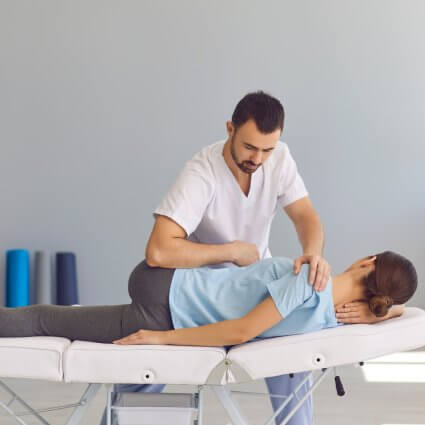
If you deal with hip pain, you know full well how it can impact you each day, from the walk to your car to rolling over in bed. Many live with it for months, assuming it will fade or that a replacement is inevitable. At Davis Chiropractic Center, we start by finding what is actually driving the discomfort, because it is not always the hip itself.
When Hip Pain Isn’t Really About the Hip
Hip pain and lower back pain are frequently confused with one another. Dysfunction in the low back, pelvis, or sacrum can refer pain directly into the hip, while a true hip problem can just as easily mimic back pain. A thorough exam tells the two apart and treats the real source.
The Back and Pelvis Connection Most Providers Miss
The pelvis and sacrum are common, overlooked contributors to hip pain, as is the junction where the upper lumbar and lower thoracic spine meet. Left unaddressed, these areas keep hip pain returning no matter how much attention the hip receives. That is why your evaluation may include checking for:
- Restricted internal or external hip rotation
- Pelvic or sacral misalignment
- Dysfunction at the lumbar-thoracic junction
- Compensation from repetitive activity, like an asymmetrical golf swing
- Age-related degenerative changes
- A prior knee or pelvis injury that shifted load onto the hip
How Hip Pain Tends to Show Up
Hip pain often starts as stiffness after activity before becoming harder to ignore. Range of motion narrows first, especially rotating the hip inward or outward. For some, discomfort stays isolated to the hip; for others it radiates into the groin, thigh, or lower back.
If rest and stretching haven’t helped after several weeks, or you’ve been told a replacement is inevitable, it’s worth finding out what else might be contributing first.
A Full-Body Evaluation, Not Just a Hip Adjustment
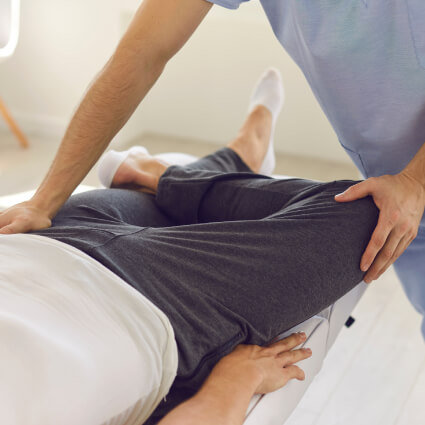
Before adjusting the hip, we rule out whether pain originates from the spine, test hip rotation, muscle function, and range of motion, and check the knee and pelvis for compensation.
We also evaluate nearby joints because dysfunction elsewhere can overload the hip. Care is built around your stage of life. A young athlete may be treated conservatively with the goal of returning to sport, while someone managing degenerative changes may focus on preserving motion. When appropriate, we also work alongside an orthopedic provider to help delay surgery.
Getting Back to Moving Without Thinking About It
Patients told surgery is their only option are often surprised the pelvis or back was never fully evaluated. Addressing those areas can restore motion written off as permanent, whether that means walking farther or enjoying a fuller golf swing. Golfers may also receive simple home exercises to help balance the repetitive demands of the swing.
Frequently Asked Questions
Could my hip pain actually be coming from my lower back?
Will I need a hip replacement?
Get Back to Moving, Not Managing
Living with hip pain that limits your walk or your golf swing doesn’t have to be permanent. Davis Chiropractic Center will pinpoint what’s driving it and build a plan around it. Contact us today to schedule your appointment.
